by Carl Pyrdum
on August 2, 2012
(Via ((Well, actually Via various posts about the sexy Venom Rule 63 cosplay that got banned by Facebook. But I’m not going to cop to that in the actual post text. What would my proper academic followers† think?
† Proper academic followers don’t read footnotes, right?)) Super Hero Photography by Adam Jay. Head here for the full photoset.)
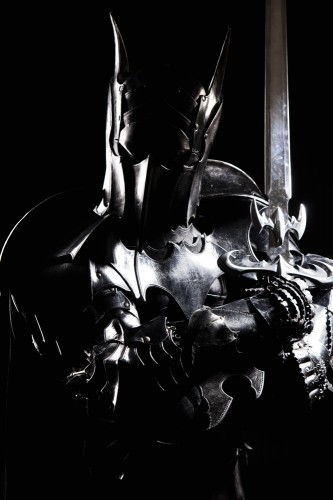
For once, my post is not deceptively titled. It is what it is. Good show.
Though, for the record, it is the long-standing position of this blog that Medieval Batman should be more Robin Hood than Black Knight. ((Who is Dark and an Actual Knight and Not a Metaphorical Knight that is Metaphorically Dark)) Or, barring that, Robert the Bruce.
{ }
by Carl Pyrdum
on July 18, 2012
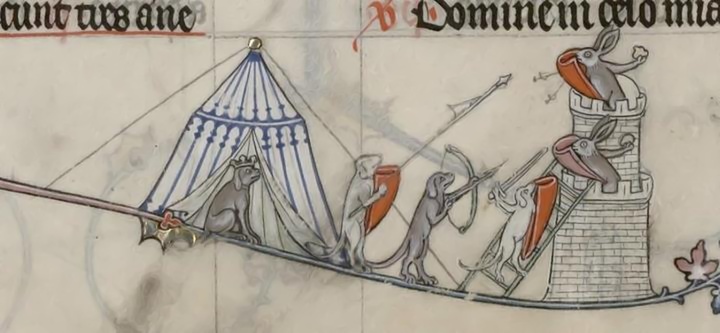
Today in the geekier parts of the blagosphere, an interesting Quora query quends trends: “What are the optimal siege tactics for taking Magic Kingdom’s Cinderella Castle?”
As it so happens, the Breviary of Renaud de Bar ((A fourteenth-century manuscript in two parts. The winter portion survives as MS Yates Thompson 8 at the British Library, the summer as Verdun Bibliothèque municipale MMS 107. The post’s image is from the summer portion, f. 137v.)) provides the answer:
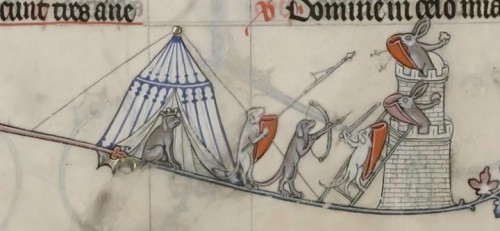
[continue reading…]
{ }
by Carl Pyrdum
on July 9, 2012
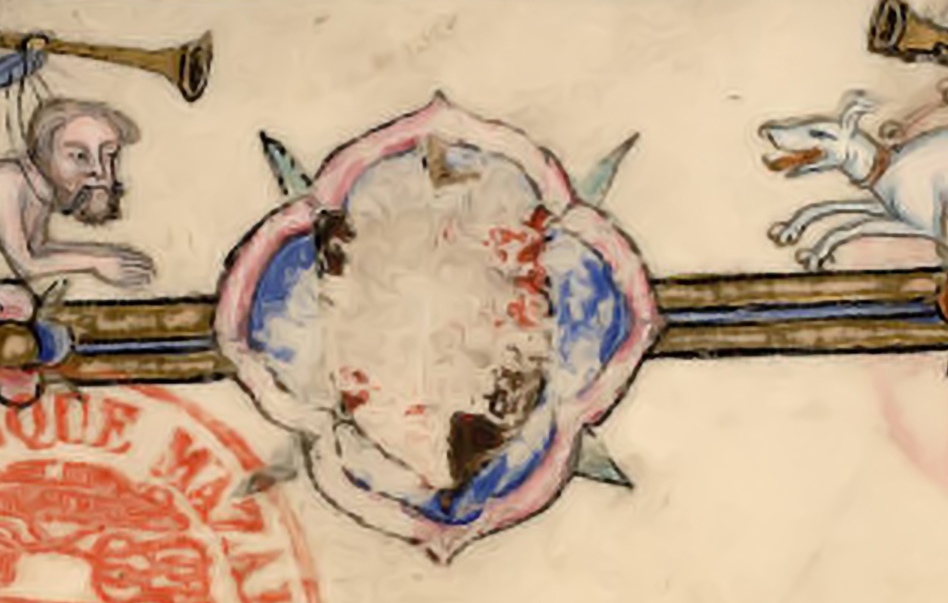
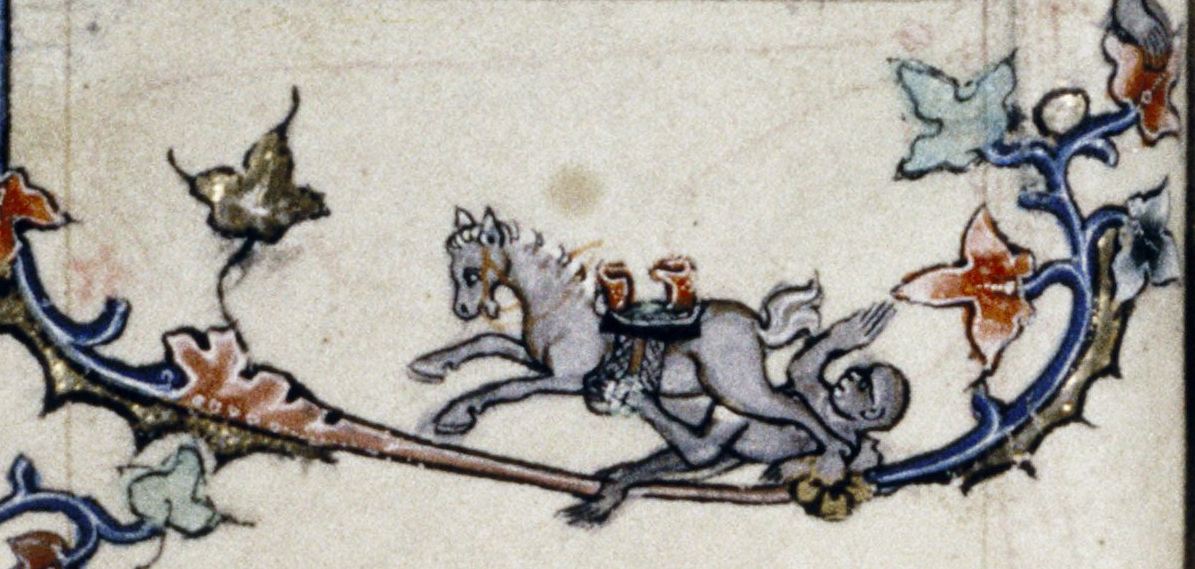
Regarding last week’s marginal horse-on-man action, ((Time travel, bitches. Get used to it.)) a reader contacted me off blog to ask, “What’s been blotted out there in between the horse guy and the rabbit?”–by which the curious reader meant this:
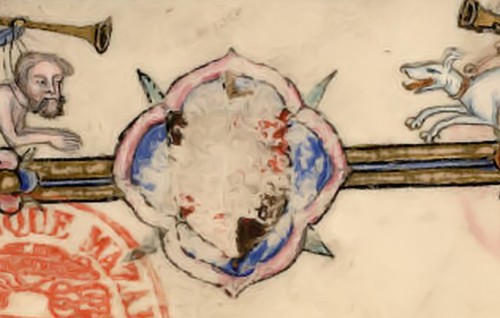 [continue reading…]
{ }
by Carl Pyrdum
on July 2, 2012
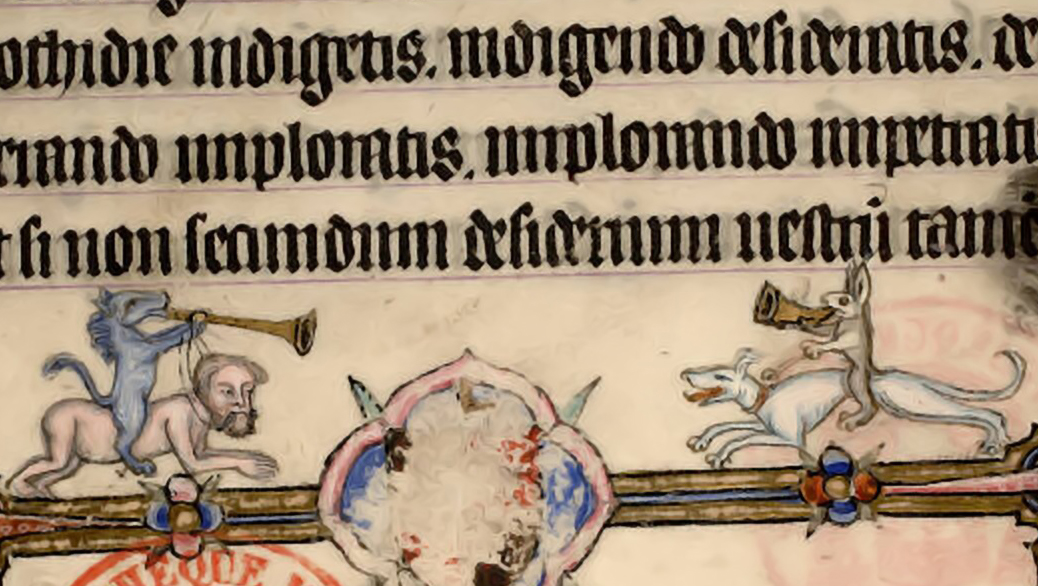
We’ve spoken before of the difficulty of getting back on horses. Even once the decision to re-mount the damn things has been made, there’s no guarantee the redoubled attempt will turn out any differently. So learned a certain marginal denizen, found in Bibliothèque Mazarine MS 520 and pictured hyeah:
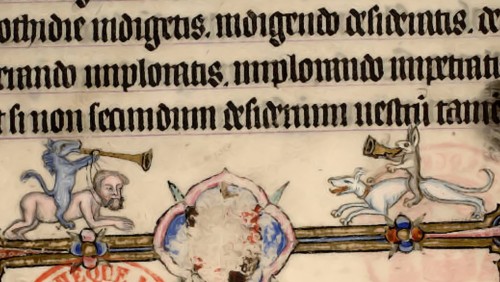
Moments before this image was illuminated, I’m pretty sure we heard a certain now-mounted marginal man exclaim, “Oh, yeah, horse? Well I’ll show you…” [continue reading…]
{ }
by Carl Pyrdum
on June 25, 2012
As an ancient series of posts here has exhaustively demonstrated, using the word “medieval” when you really just mean “stupid,” “backward,” or “wrong-headed” ((Or, increasingly, “Muslim”.)) is a pet peeve of mine. ((A peeve, I might add, I’ve tried to kill off through neglect, but the darn bugger keeps finding enough food on its own, even when I don’t put any out for days on end.†
†Perhaps there’s a no-kill shelter you can send your old pet peeves to, one that makes sure they get sent to a farm upstate.)) The worst is when people attach it to fundamentalist Christians, the Westboro Baptist Church types (who picket at any funeral guaranteed to piss people off when picketed), because the “Answers in Genesis“, “God Hates Fags” ((By the by, anyone know if Westboro Church has always been in charge of godhatesfags.com? And while we’re (not really) on the subject, why was there no Internet movement to preserve godhatesfigs.com when its registration lapsed? A criminal oversight!)) way of reading the Bible is essentially hyper-Protestan and thus Early Modern at the earliest, really a feature of Puritan-era England during the Interregnum, ((That dude who said the Earth was essentially 6000 years old on the basis of some Biblical ‘calculations’? He published that finding in 1650, the same year Harvard incorporated.)) to be more precise—so not medieval by about a century and a half. ((And that’s using the most gracious definition of medieval, ending it around 1500, or with the (re)discovery (by Europeans) of the New World.))
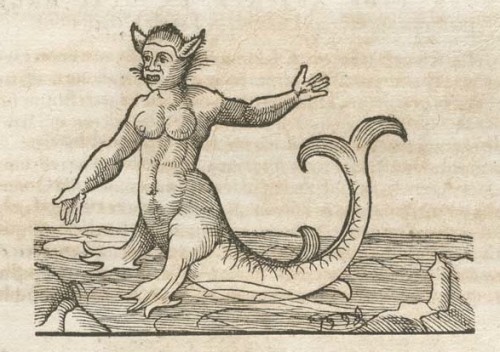
But those of you who long for the chance to lay the medieval smack down on some modern day Biblical literalists without being countersmacked by yours truly, rejoice! For I say unto you, the people responsible for the ACE line of fundamentalist textbooks are now appear to have been for some time ((If this story from a Scottish newspaper can be trusted reliable on matters of American textbookery.)) including the Loch Ness Monster as possible evidence against evolution in their Biology textbook designed for home schooled ninth-graders. Thus spake the ACE:
Are dinosaurs alive today? Scientists are becoming more convinced of their existence. Have you heard of the ‘Loch Ness Monster’ in Scotland? ‘Nessie’ for short has been recorded on sonar from a small submarine, described by eyewitnesses, and photographed by others. Nessie appears to be a plesiosaur.
[continue reading…]
{ }
by Carl Pyrdum
on May 28, 2012

I believe I’ve mentioned at least once before my new hobby, antiquing. ((A common hobby for the heartbroken, it seems.)) Well, whilst ((Suck it, Coquette.)) haunting the local monthly antique show, I stumbled across a man selling manuscript leaves. Or, rather, he stumbled across me, as I was standing there helpfully pointing out to passers by that he’d completely mislabeled every single manuscript leaf he had for sale. ((Bibles identified as secular works, books of hours identified as histories, Flemish manuscripts labeled Irish and Irish labeled Russian, and nearly everything pegged as two to three centuries older than it was.))
Now, in general, leaves ripped from manuscripts and traded as framed art raise both my dander and my ire–cutting up old books completely destroys the manuscript’s provenance, rendering it mostly useless for scholarly work–but this guy clearly wasn’t cutting up manuscripts himself, just reselling leaves someone long ago cut up, so I cut him some slack and struck up a friendly conversation with him. ((Like when you run into the guy who delivers the girls to the happy ending massage place by the airport. It’s not like he’s the one who kidnapped and enslaved them. He’s just the middleman–and who doesn’t love a middleman?))
To my surprise, the dealer was glad to have the corrected information on his wares and interested to know how this random guy in the Voltron tee-shirt ((See footnote #2, Coquette, if you would.)) knew so much about manuscripts. Indeed, once he knew my scholarly bonafides, I couldn’t shake the guy. Each step away from his booth brought to his mind some new stashed away treasure that I must be told about immediately. There’s a happy ending to the story though, as my feigned interest was replaced with the actual stuff when he trotted out this, a (presumably) ((I say presumably as, for all my recently vaunted manuscript lore, I’m still but an amateur at manuscript identification. Weird eyes to me says Spanish, but I’m willing to be proven laughably wrong here, actual experts. *hint hint*)) late medieval Spanish liturgical ((See the immediately previous footnote, experts.)) manuscript decorated with marginal saints. I snapped a few pictures, a gallery of which I’ve attached to the end of this post. ((For once, the only person to blame for the image quality is me. But I think these shots, snapped with my cell phone camera, are way nicer than nearly anything the Morgan Library is willing to offer the public. Thus, clearly, if you’re considering donating money to the Morgan to help pay for manuscript conservation, you might think about sending some my way instead.)) A couple of interesting high points first. [continue reading…]
{ }
by Carl Pyrdum
on May 27, 2012
Don’t you just hate it when Hollywood butchers your favorite book?
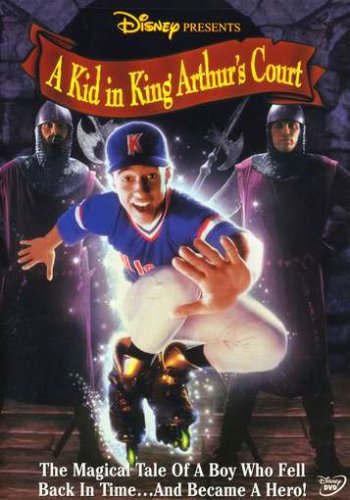
Me, too.

Anyone have a spare Benjamin? ((The extra thirty bucks will surely be used for a good cause and almost certainly absolutely not for a Kid in Aladdin’s Court / Kids of the Round Table double feature.))

——————-
Bonus: IMDB is a strange place.
Bonus Bonus: There are even response reviews.
{ }
by Carl Pyrdum
on May 21, 2012
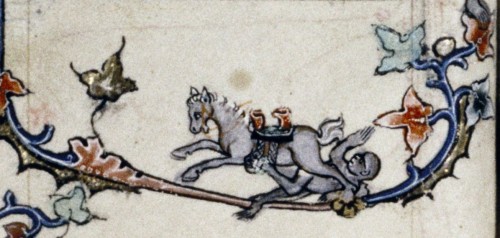
If my recent experience is representative–and we’re going to pretend for the sake of this post that it is– ((Em Dash–when you’re too lazy to format a footnote.)) whenever something’s gone all rotten in your personal or professional life, trust that you will soon be flush with horse enthusiasts bent on getting you “back on”.
Were the next panel of the marginal monkey below’s life extant, it’d almost certainly feature his monkey pals assuring him that, really, recent setbacks ((And that he’s still being drug behind said horse by the stirrup.)) notwithstanding, horsetop is the way to go:
[continue reading…]
{ }
by Carl Pyrdum
on May 14, 2012
Welcome back, BoingBoingkateers! And welcome, too, to all you How-To Geeks, Geek Thinkers, Neatoramans, ((Not to be confused with the neato ramens once sold on Neatorama.)) and all other various and sundries referred to my old Mario marginalia post by Making Light. Absence makes the heart grow fonder, but a sudden spike of attention in the wider blogosphere also makes the heart grow to be less absent, so here I am, back to blogging, after long absence. And what better way to return than by returning to an old subject? ((What you say?? New content would be better? Raising expectations would only put the blog on the path to destruction.))
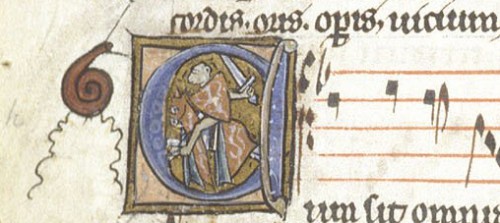
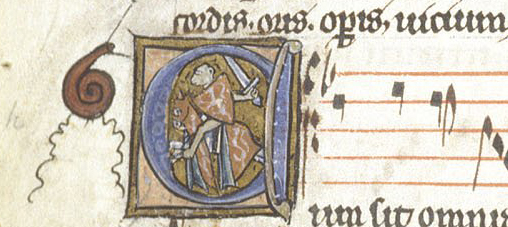
As you’ll all no doubt recall, the main thesis of my Mario post, ((One wonders why I didn’t just write my thesis on marginal gravity…)) and several posts before and after that, is that Gothic manuscript pages–particularly those pages found in the more de luxe manuscripts–are laid out as though the elements on the page were subject to a force of gravity that pulls–or threatens to pull–everything down toward a gaping pit in the lower margin, save, of course, the text on the page and a few anchored elements. Initial capitals and large bordered illuminations count as “anchored elements,” which, like Mario’s question blocks, are attached directly to the sky/page somehow, and everything else needs to be held up by those anchors. Thus, the snail at the head of this post, having strayed into the page’s left margin to escape the jousting monkey knight, ((As you may also recall, snails vs. knights was a joke so hilarious to medieval illuminators that they put it everywhere.)) has to be supported by a last minute “hill” composed of a scribbly “u”.
[continue reading…]
{ }
by Carl Pyrdum
on March 19, 2012
When coming back after a brief hiatus, I always feel the pressure to make my next post something as epic as the lapse was long. ((And as you might imagine, the desire to be proportionally epic itself delays the return, as ideas that normally would work just fine are discarded in favor of some unknown but surely more epic alternative, this extension only further increasing the return threshold and the concomitant requirement for still more epic levels of epic.‡
‡ Eventually, of course, I just give up and post something lame and/or self-referential. §
§Barring that, I just garnish the hell out of it with footnotes ¶ that are as superfluous as the lapse was long.
¶Like so.†
†Note that the grovelling blogger dares no longer use the † in his nestled footnote configuration, for fear of the wrath of the noble (and unconscionably sexy) Reynard!)) If I knew what’s good for me, I’d probably just silently reappear without explanation, ((Like I almost did last week.)) but when have I ever been accused of knowing what’s good for me? ((Certainly never in the comments section of that much-traveled Gingrich post,‡‡ that’s for sure.
‡‡No, not that one. The other post in which I slag off on Newt. The Fisky one.‡‡‡
‡‡‡Actually, I’m pretty sure†† that particular post’s comments thread is what’s breaking the Disqus comment import utility. Every time I try to run it, it hangs up and crashes trying to import all eleventy-billion of them. Oh, well, I’ll always have the Huffington Post’s (much longer) comment thread to read, should I need a shot of self-flagellation.
††And I am pretty sure that your readers may no longer be described as readers, rather as cleaners or rag-weilders, for they long ago vomited at your mawkish display of self-congratulation and have stopped reading so that they may clean their intestinal juices off their keyboards and other peripheral devices. But the great Reynard does not pity them, even as they sop their puke from their desks, sobbing, no doubt, and cursing the name of the Holy Father who they blasphemously blame for entrapping them by allowing the invention of such an infernal device as “The Internet”, for these former readers of yours, insipid blogger, have only themselves to blame for reading the feeble leakage of blogger who links his own blog so often–not to mention one who leaks incontinent into his trousers as he pathetically onanismically linkwhores, one who is so foolish with his money that he can now no longer even afford a rag or sponge to clean up his squalid seat after his prematurely aged sphincter has betrayed him.)) Though it’s only been about a month since my last marginalia, I’m digging deep into my collection of weirdness this week, brushing past the milder fare, your stilt-walking monkeys and luxuriantly accessorized lady pigs and the like, and going straight for the top shelf: shockingly gratuitous blasphemy.
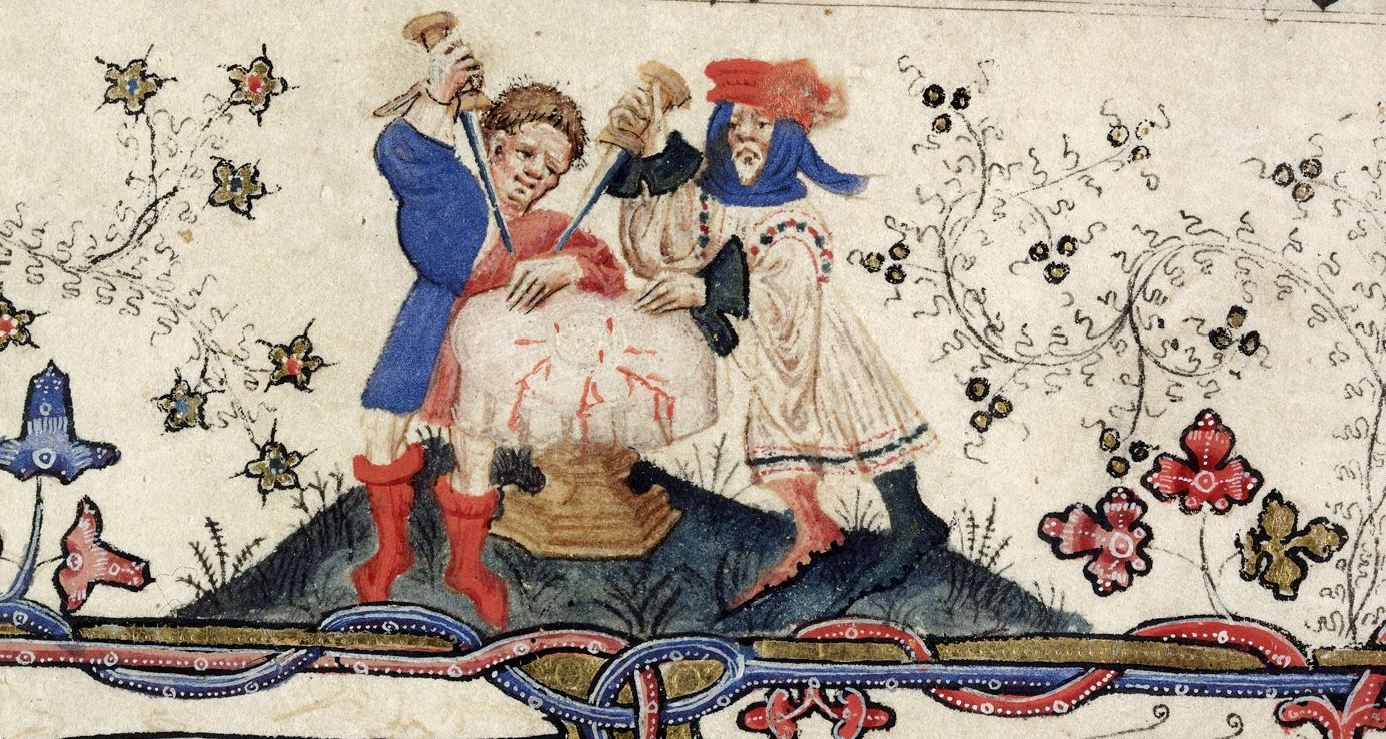
So let us peel back the pages of the Lovell Lectionary, shall we? (British Library MS Harley 7026)
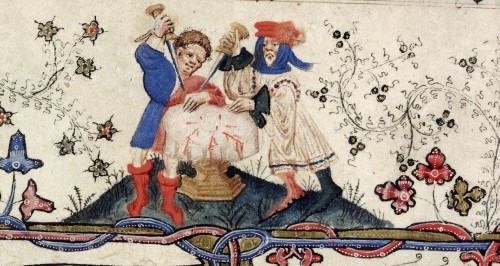
For those of you confused by why I’d advertise blasphemy and deliver a picture of two men with huge icepicks standing over a table with a bloody circle on it, some perspective is in order. ((If, on the other hand, you’re in the camp that knows all about that transubstantiation thing, feel free to skip this next few sentences.))
[continue reading…]
{ }



Recent Comments